Systemic Drift
The point where emergent gameplay mechanics evolve beyond the designers' intent. Opinions: We embrace it. If the player finds a bug that is actually a fun mechanic, it remains as a 'feature toggle' for the hardcore community.

MatrixFlow is a Rome-based independent studio born from the friction between mathematical rigor and chaotic creativity. We don’t just build games; we architect interactive systems where every pixel serves a mechanical purpose.
HQ Location
Via Roma 123, IT
Focus
Systemic Design / Noir Aesthetics

"Constraint isn't a limitation; it's the only tool that forces a breakthrough."
[DATA: COMMENTARY_LOG_01]
The MatrixFlow origin story isn’t about a massive VC injection. It began in a 20-square-meter apartment on the outskirts of Rome, fueled by a single developer’s obsession with rhythmic puzzles. Our founder built the first prototype—now known as the 'Neon Logic' engine—using nothing but basic procedural tools and a refusal to settle for generic mobile mechanics.
When the prototype went viral, it proved a fundamental studio hypothesis: a small, hyper-specialized team can outmaneuver the giants if they prioritize mechanical elegance over marketing budgets. Today, we maintain that same lean agility, operating with a core trio of specialists who oversee every line of code and every synth note.
Our philosophy, "Constraint-Driven Creativity," dictates that we start every project with a technical restriction—be it a 48-hour build window or a binary-only control scheme. These limits act as a catalyst, forcing us to discover gameplay loops that wider, unrestricted scopes often miss.
Our approach is evaluated through "stress-to-failure" playtesting. We define robustness not by a lack of bugs, but by systems that remain fun when pushed beyond their intended parameters. This means testing for edge cases where player latency meets complex procedural generation, ensuring that even under extreme hardware constraints (e.g., legacy mobile chipsets), the core aesthetic "pulse" remains intact. Limits are our safeguards against scope creep.
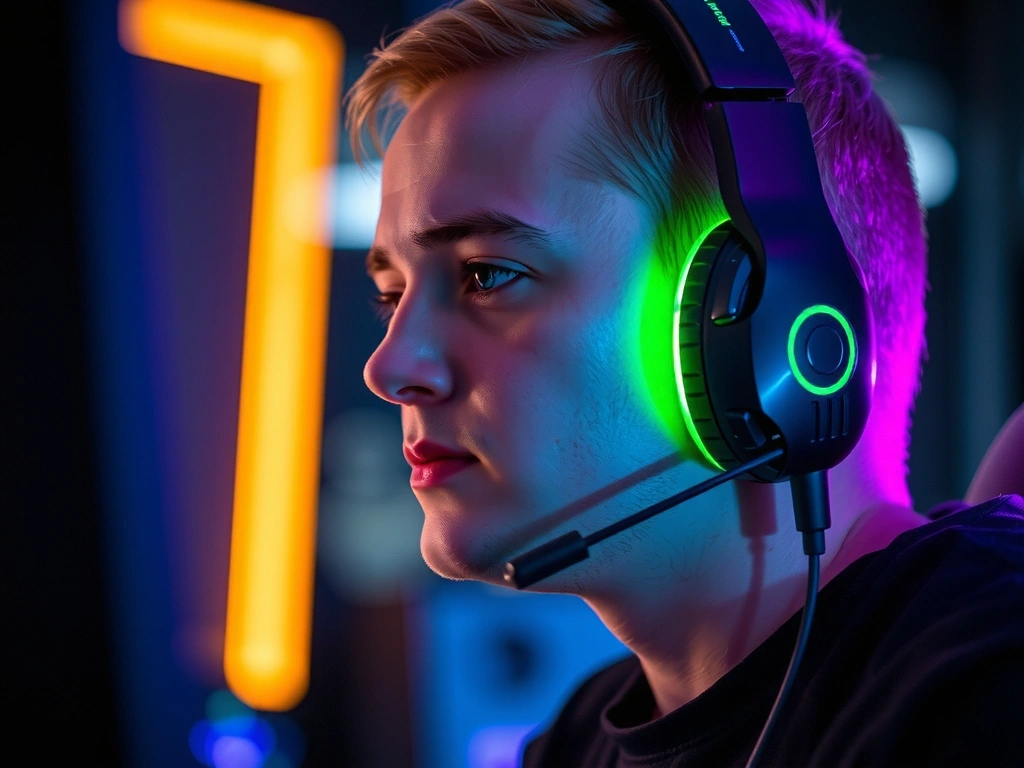
Primary Pivot
Responsible for the fundamental logic layers. Ensures that every game mechanic is mathematically sound before a single pixel is painted.
Our stack is chosen for maximum hardware intimacy, allowing us to squeeze performance out of standard 16GB RAM configurations.
Dynamic Freelance Roster
We prioritize the 'feel' of a control stick over the retention numbers of a spreadsheet. If the movement isn't satisfying, the game doesn't ship.
Our studio operates in 2-week 'silence' sprints where communication is limited to essential technical syncs to allow for deep creative immersion.
Every launch is followed by a brutal technical audit. We document every piece of technical debt to ensure our next iteration is faster.
Visual Fidelity vs. Frame Stability
We choose consistent 60FPS over 4K ray-tracing. Our mitigation is a high-contrast 'Noir' stylized aesthetic that looks premium without taxing GPUs.
Hardcore Depth vs. Accessibility
Our systems have steep primary learning curves. We mitigate this through invisible tutorial cues and modular difficulty layers that don't break immersion.
Engine Customization vs. Delivery Speed
Building custom pipelines takes longer but ensures uniqueness. We mitigate the delay by reusing optimized core modules for procedural geometry across projects.
Terminology
The point where emergent gameplay mechanics evolve beyond the designers' intent. Opinions: We embrace it. If the player finds a bug that is actually a fun mechanic, it remains as a 'feature toggle' for the hardcore community.
Our signature lighting technique using shadows to hide low-polygon assets. Opinions: Efficiency is a form of art. High visual impact with zero tax on mobile benchmarks is the gold standard.
The tactile resistance in controls that tells a player they’ve failed. Opinions: 'Instant' is boring. We believe in kinetic consequences that make every successful move feel earned.
The injection of human "imperfection" into procedural generation. Opinions: Perfect math is cold. We use deliberate noise in our algorithms to simulate the hand of an artist.
We scale through a "vessel and fluid" model: a rigid core team (vessel) manages the creative vision while a highly fluid layer of global freelancers (fluid) provides specific asset volume as needed.
We prioritize upfront value. While we explore post-launch content, we strictly avoid pay-to-win mechanics or disruptive micro-shaping of player habits.
Every module we build is cross-platform optimized for Steam Deck, PC, and high-end mobile, with a focus on stable frame rates regardless of hardware variations.
We commit to a 12-month roadmap of performance optimization and quality-of-life updates for every major title, ensuring the "MatrixFlow" standard is maintained.
A failure is a game that is technically perfect but emotionally inert. If a player feels nothing after two hours, the studio has failed its mandate.
Whether you're a journalist looking for a press kit or a fellow developer seeking collaboration, our gateway is open.